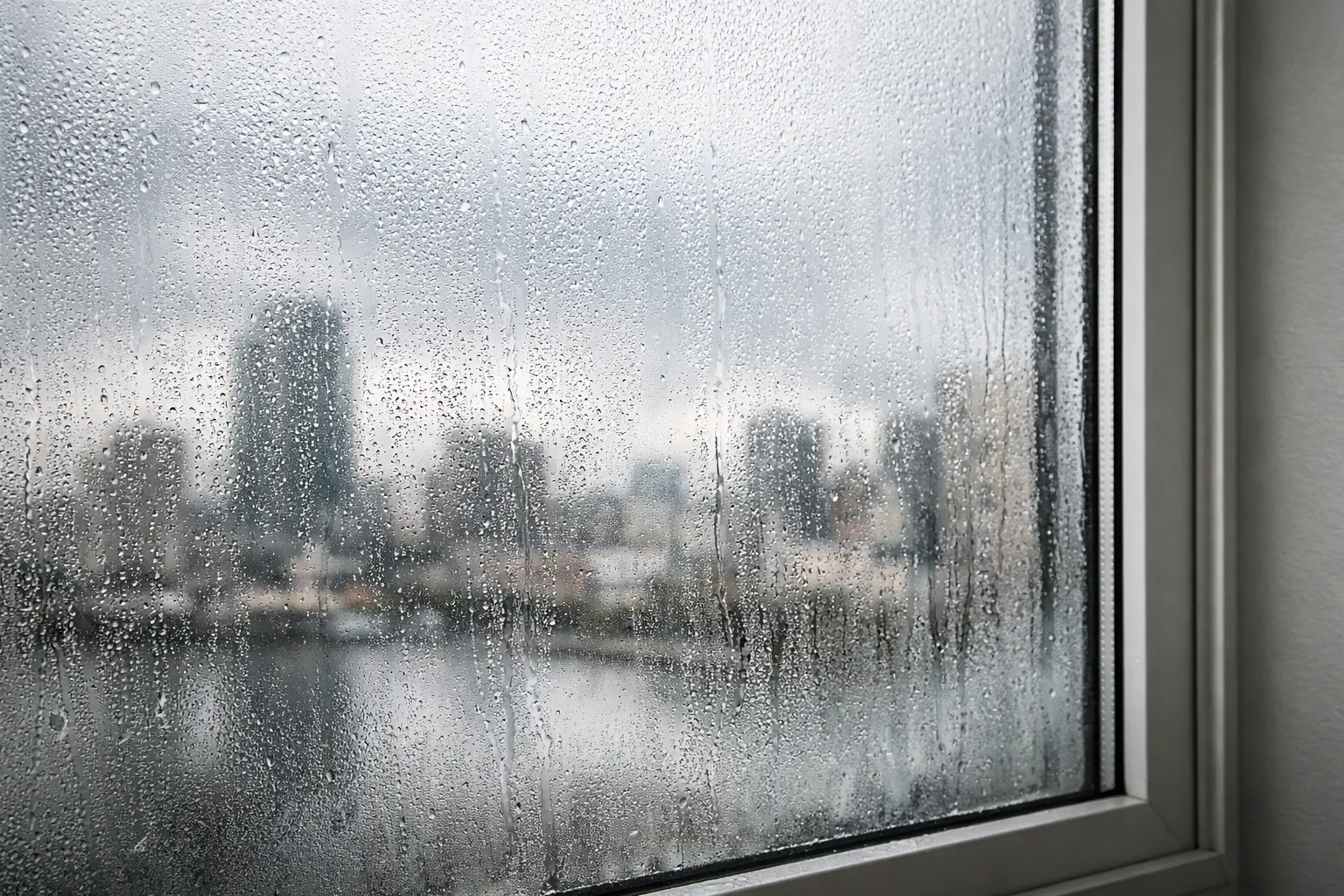
A Vancouver winter morning can make the problem hard to miss: water beading on the room-side glass, damp window tracks, and sometimes a little black spotting at the corners. Homeowners often ask me, “why do windows have condensation inside?” The straight answer is that warm, humid indoor air is meeting a cold window surface. The bigger question is whether it is a normal humidity issue, a warning that the window is underperforming, or a sign that window replacement should be on your list.
The location of the moisture matters. Condensation on the room-side surface is different from fog or moisture trapped between panes. One may improve with a few changes at home; the other usually points to an aging insulated window unit.
Why do windows have condensation inside?
Air always holds some moisture. Cooking, showers, laundry, houseplants, pets, and simply living in a home all add water vapor indoors. When that warm air touches a cold surface, it cools down. At a certain point it cannot hold all that moisture, so water forms on the surface. That is condensation.
Windows are often the coldest surface in the room, especially in older Lower Mainland homes with aluminum frames, older double-pane units, or single-pane glass. Think of a cold drink sweating on a warm day. The same basic thing is happening to your window, except the cold surface is on the inside of your home during winter.
This does not automatically mean you need new windows. A particularly cold night, a busy kitchen, or several long showers can create temporary condensation even on good windows. But frequent moisture that runs down the glass, wets the sill, or leaves mold behind deserves attention.
The three places condensation can show up
On the room-side glass
This is the most common type. It usually means indoor humidity is high for the outdoor temperature, the glass is cold, or both. A home can have high indoor humidity because moisture has nowhere to go, particularly after air sealing improvements. Newer homes can experience it too if ventilation is limited.
The practical goal is balance. You want enough humidity for comfort, but not so much that water collects on cold windows. During colder weather, many homes need lower indoor humidity than homeowners expect. The colder it gets outside, the less moisture the indoor air can carry before it condenses on glass.
Between the panes
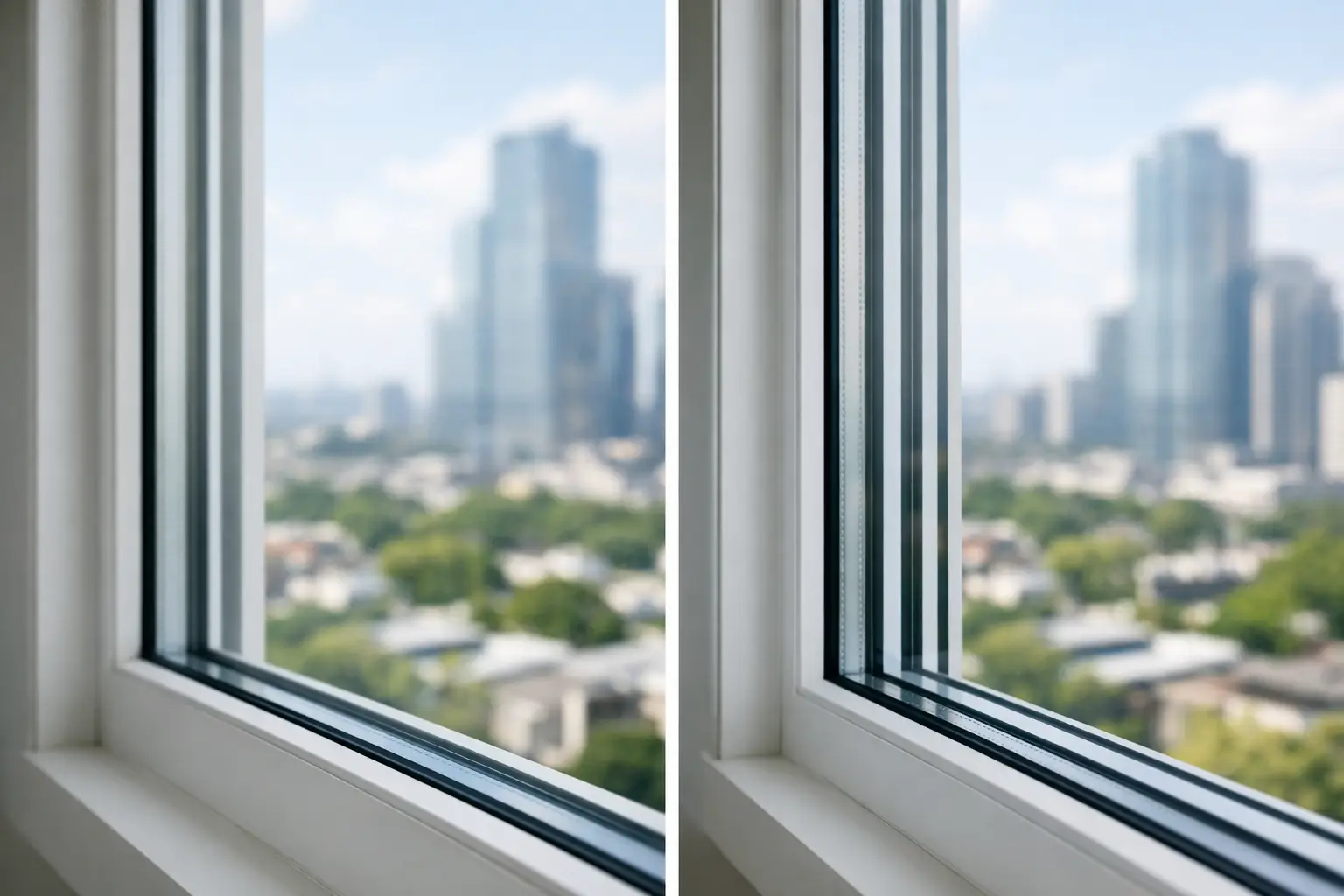
Fog, haze, or droplets between two panes are a different issue. Modern double- and triple-pane windows have a sealed space between the glass, often filled with insulating gas. When that seal fails, moisture can enter that space and create a cloudy appearance that cannot be wiped from either side.
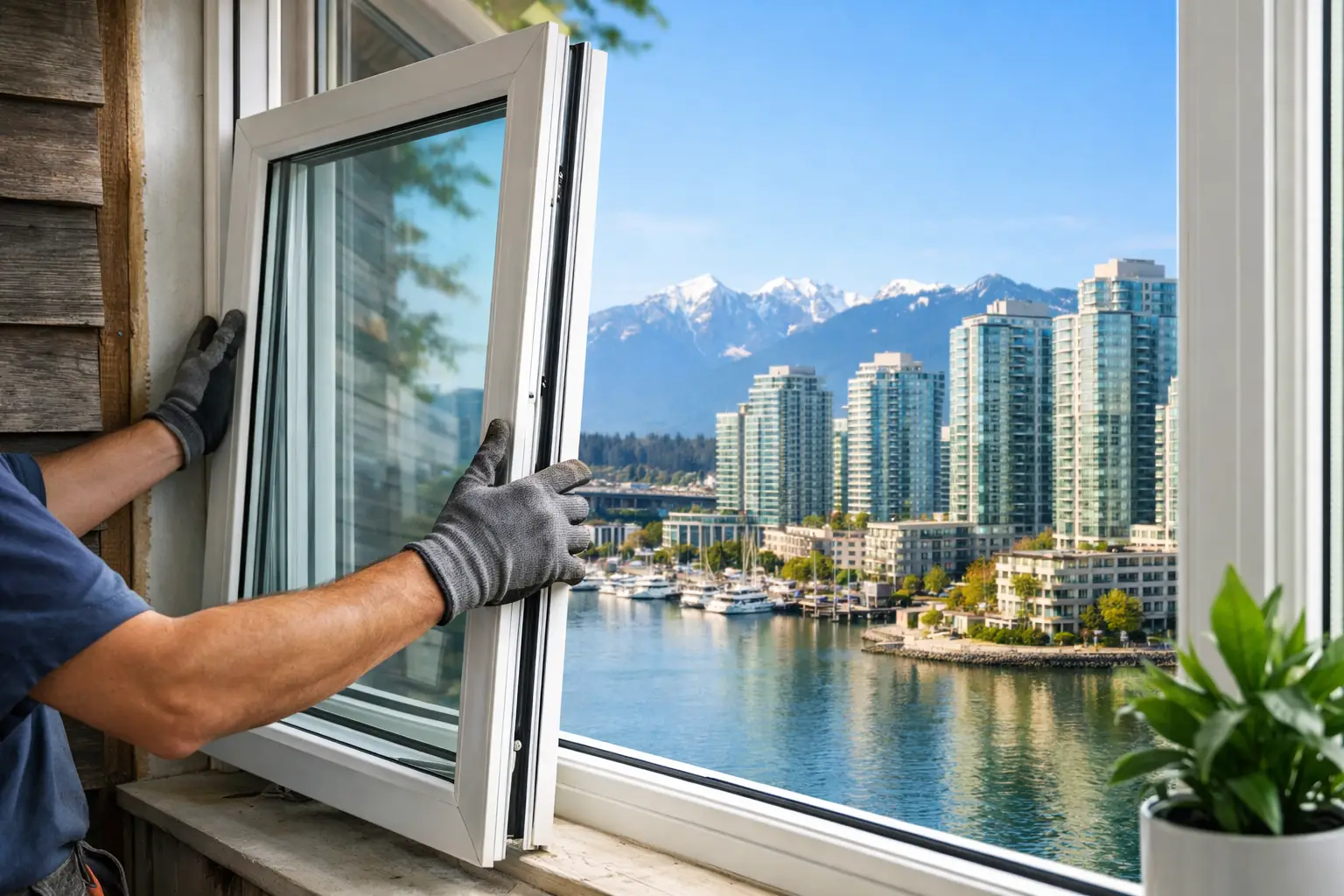
If this is happening in several older windows, it is worth looking at the whole window replacement picture rather than treating each unit as an isolated annoyance. Failed seals, drafts, cold rooms, and worn frames often arrive together. Replacing multiple windows at once can also make installation planning and pricing more sensible.
On the outside glass
Exterior condensation is usually not a concern. In fact, it can happen when an energy-efficient window keeps indoor heat from warming the outside pane. On a cool, humid Lower Mainland morning, the exterior glass may briefly fall below the dew point and collect moisture.
It can be annoying if you are trying to look outside at sunrise, but it is generally a sign the window is insulating well, not poorly.
Why old windows make condensation worse
Older windows lose heat quickly. The interior glass gets colder, which means condensation forms at lower indoor humidity levels. Aluminum frames are a common culprit in Vancouver, Burnaby, Richmond, and many older communities across the Lower Mainland because metal transfers cold readily. You may see water around the frame even when the center of the glass looks fairly clear.
Drafts make the situation worse as well. Cold outdoor air leaks around the window and lowers the temperature of nearby surfaces. Window coverings can contribute too. Tight blinds or heavy drapes trap warm, humid room air against cold glass, creating a small moisture chamber behind the fabric.
Here is what I tell homeowners: do not judge a window only by whether you can still see through it. If it is cold to stand beside, creates recurring condensation, lets in drafts, or has moisture between panes, it may no longer be doing its job as part of your home’s exterior wall.
Start with humidity and airflow
Before spending money, take a practical look at what is adding moisture and what is moving it out. Run bathroom fans during showers and for a while afterward. Use the kitchen range hood when cooking. If you dry clothes indoors, expect that to add a surprising amount of moisture to the home.
A simple hygrometer can help you stop guessing. It measures relative humidity, and it is useful because the right number depends on the outdoor temperature. There is no magic setting that works for every home all winter. If windows are wet in the morning, lower the humidity a little and see whether the situation improves.
Keep blinds and curtains open for part of the day so warm air can reach the glass. Make sure furniture is not blocking heat registers below windows. If your home has a heat recovery ventilator or other ventilation system, understand how it is set up and whether it is being used consistently.
These steps can reduce room-side condensation. They will not correct a failed seal, a severely cold frame, or a window that has reached the end of its useful life.
When condensation means window replacement is worth considering
Window replacement becomes a more realistic conversation when condensation is part of a pattern, not just a one-off weather event. I would look more closely if you have moisture between panes, recurring damp sills, frame staining, cold drafts, mold growth around multiple windows, or rooms that are uncomfortable despite reasonable heating.
The age and construction of the window matter. An older aluminum window in a 1970s or 1980s home is very different from a newer vinyl double-pane unit with a minor humidity issue. Installation matters too. Even an excellent replacement window will disappoint if it is poorly fitted, insulated, or sealed into the opening.
For most Lower Mainland homes, a quality double-pane replacement window with Low-E glass and an insulating gas fill is a sensible starting point. Triple-pane can be worthwhile for homes with very cold exposures, persistent comfort issues, or meaningful traffic noise concerns. But it is not an automatic upgrade everyone needs.
If this were my home, I would compare the added cost of triple-pane against the actual problem I am trying to solve. For a quiet, sheltered home with decent heating and modest winter condensation, good double-pane windows may be the better value. For a north-facing room that is always cold, or a home near a busy road in Surrey, Coquitlam, or Langley, paying more may make sense.
Do not blame the window for every drop of water
This is where honest advice matters. New energy-efficient windows reduce the chance of interior condensation because the room-side glass stays warmer. They do not eliminate the laws of physics. If indoor humidity stays very high during a cold spell, even new windows can show some moisture at the edges.
On the other hand, homeowners should not be told that every condensation complaint is simply their fault for cooking or showering. If windows are old, frames are cold, seals have failed, and water is regularly damaging interior finishes, the windows are contributing to the problem. A good window replacement consultation looks at both the home’s humidity and the condition of the existing windows.
Be cautious with anyone who promises that one product feature will eliminate all condensation forever. Real homes have different layouts, ventilation habits, heating systems, exposures, and budgets. The right recommendation should reflect those details, not a canned sales pitch.
A practical way to assess your windows
For a week, notice when and where the condensation appears. Is it limited to the kitchen after dinner? Is it on every bedroom window each morning? Does it form only during cold snaps? Is the moisture on the room-side surface, outside, or trapped between panes?
Also pay attention to comfort. Do you feel cold air near the window? Are the frames discolored? Are the sills repeatedly damp? Is the issue affecting one window, or most of the house? Those observations tell you far more than a salesperson glancing at a foggy pane for five minutes.
If several windows are showing age-related symptoms, get a clear, itemized window replacement quote. Ask what glass package is included, whether the frames are locally manufactured, how the openings will be insulated and sealed, and what product and installation warranties apply. A low number without those details is not automatically a bargain.
Frequently asked questions
Is condensation on the inside of windows bad?
A small amount during a cold spell is common. Persistent moisture is not something to ignore because it can dampen sills, encourage mold, and signal high humidity or inefficient windows.
Can new windows stop condensation?
They can greatly reduce it by keeping the interior glass and frames warmer. They cannot fully prevent condensation if indoor humidity is too high for the outdoor temperature.
Should I choose triple-pane windows for condensation?
Triple-pane windows can improve interior surface temperatures, but they are not always necessary. The value depends on your current windows, home exposure, comfort goals, and budget.
A wet window is your home giving you useful information. Start by managing moisture and airflow, then look honestly at the age and performance of the windows themselves. If you are seeing recurring problems across your home, I am always happy to help homeowners sort out whether window replacement is the sensible next step, without turning a simple question into a high-pressure sales appointment.