Most homeowners do not start a window replacement project because they want a new operating style. They start because the bedroom is cold, the living room is noisy, the old aluminum windows sweat all winter, or the house feels stuffy when the rain finally lets up. For homeowners researching tilt and turn windows Canada options, the big question is simple: are they actually worth the added cost?
My straight answer is that tilt and turn windows can be an excellent choice for the right rooms and homes, especially when ventilation, security, and easy cleaning matter. They are not automatically the best choice for every opening, though. A well-built casement or fixed replacement window may deliver better value in some areas of your home.
What Is a Tilt and Turn Window?
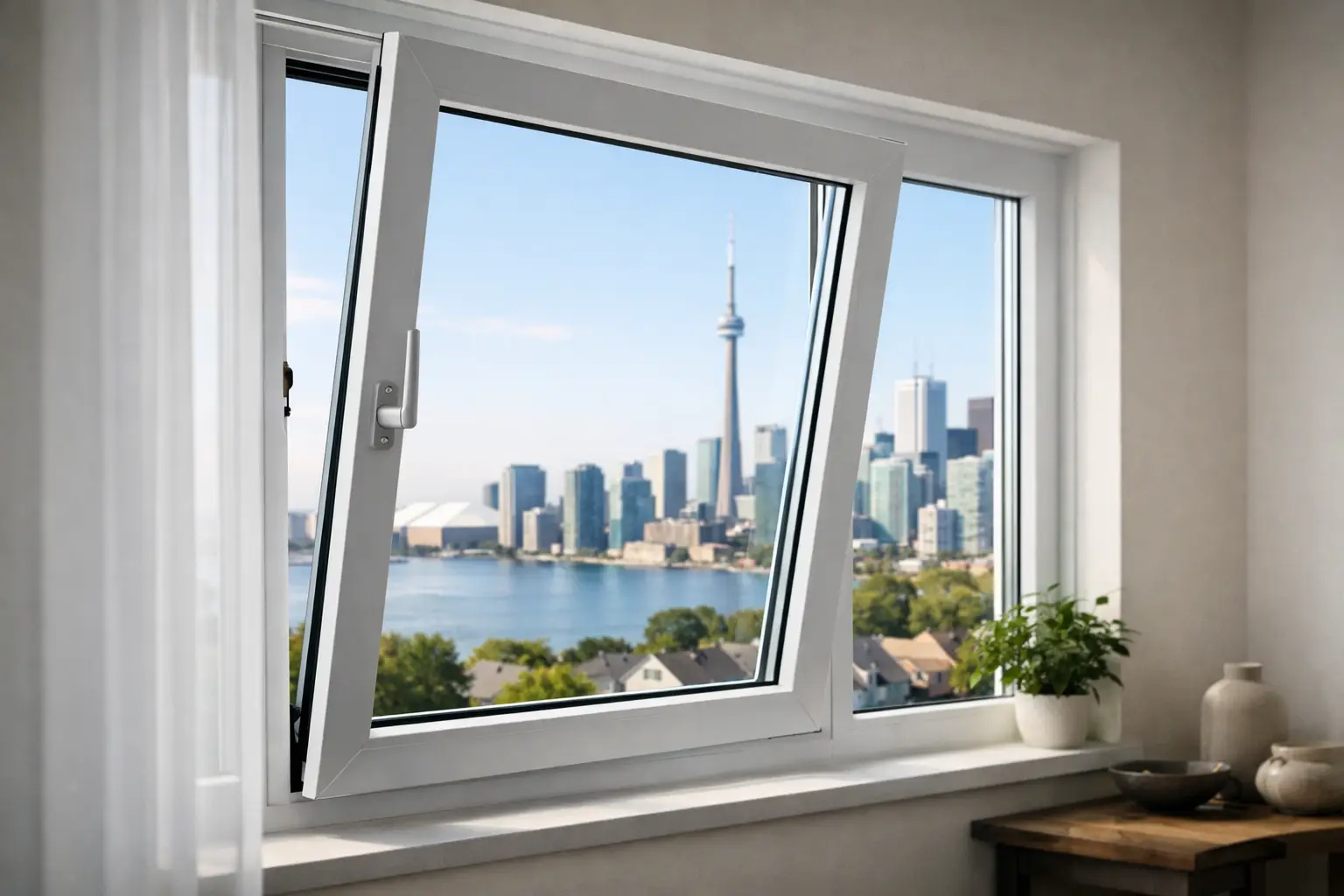
A tilt and turn window does two jobs with one sash. Turn the handle one way and the window swings inward like a door. Turn it another way and the top of the sash tips inward a few inches, creating a narrow opening for ventilation.
That tilt position is the feature most homeowners notice first. It lets fresh air enter near the top of the opening while keeping the bottom closed. On a mild Lower Mainland day, it can provide controlled airflow without having a window swung fully into the room.
When fully opened inward, the sash also makes exterior cleaning easier from inside the home. That can be useful on upper floors, particularly in townhomes or houses where reaching the outside of a window is awkward.
Are Tilt and Turn Windows a Good Choice for Window Replacement?
Yes, provided you choose them for the reasons they are good at. Tilt and turn windows are generally known for a tight seal, flexible ventilation, and a substantial multi-point locking system. When closed, the sash presses against the frame around its perimeter rather than relying on a simple latch on one side.
For window replacement in Vancouver, Burnaby, North Vancouver, and other wet Lower Mainland communities, that tight closure can be appealing. Wind-driven rain and damp winter weather expose weak seals quickly. A quality, properly installed window matters far more than a fancy brochure when November weather arrives sideways.
That said, the style has trade-offs. Because the sash opens inward, you need clearance inside the room. A deep windowsill filled with plants, a kitchen counter, or furniture placed tightly against the wall can make daily use annoying. I always tell homeowners to picture how the window will operate after installation, not just how it looks in a showroom.
Where this style makes the most sense
Tilt and turn windows often work well in bedrooms, home offices, bathrooms, upper-floor spaces, and rooms facing traffic or neighbors where you want airflow without opening the window wide. The tilt setting can also be useful when you want ventilation while maintaining more control than a fully open casement window.
They are particularly worth considering in a major window replacement where you are already moving from old sliders or aluminum frames to modern energy-efficient windows. If you are investing in the whole exterior envelope, choosing the operating style room by room gives you a better result than installing the same window everywhere just because it was the easiest quote to prepare.
Tilt and Turn Windows vs. Casement Windows
This is the comparison I have most often at a kitchen-table appointment. Both styles can be energy efficient. Both can provide excellent ventilation. The choice usually comes down to function, appearance, and budget.
A casement window swings outward and is usually the more familiar option for Lower Mainland homes. It does not take up interior space when open, which makes it a practical fit over a kitchen sink or near furniture. In many replacement window projects, it is also the more cost-conscious way to get a tight-sealing, operable window.
A tilt and turn window swings inward and offers the added tilt position. It tends to have more complex hardware and a different European-style appearance. That can be a real advantage if you value the operation, cleaning access, and security features. If you will only ever use it like a standard swing window, however, you may be paying for functionality you do not need.
If this were my home, I would not choose one style blindly. I might use tilt and turns in upstairs bedrooms, a bathroom, or a street-facing office, then use casements or fixed windows elsewhere to keep the overall window replacement cost sensible.
Energy Efficiency: Focus on the Whole Window
It is easy to get distracted by whether a window tilts, turns, slides, or swings. The operating style matters, but it is only part of energy performance. Frame quality, insulated glass, Low-E coating, spacer system, weatherstripping, and installation all affect how the finished window performs.
For most homes in Vancouver and the Lower Mainland, a quality double-pane replacement window with appropriate Low-E glass is often a sensible starting point. Triple-pane glass can be worthwhile in certain situations, such as a particularly cold room, a noisy street, a very exposed location, or a homeowner focused on maximum comfort. It is not a mandatory upgrade for every opening.
Here is what I would look at before spending extra: Where is the room? Is it cold now? Does it face a busy road? Is there strong sun exposure in summer? Are the existing windows drafty because of the window itself, the old frame, or poor installation around the opening? Those answers should guide the specification.
A high-performance window installed poorly is still a disappointing window. Proper flashing, insulation, air sealing, and finishing are not glamorous parts of a quote, but they are where comfort and long-term performance are won or lost.
What Do Tilt and Turn Windows Cost in Canada?
Tilt and turn windows generally cost more than a comparable fixed window and often more than a basic casement or slider. The reason is not mystery pricing. They use more specialized hardware, a more involved sash design, and often require more careful manufacturing and installation planning.
The final price depends on the size of the opening, frame material, glass package, color, grille choices, access, trim work, and the condition of the existing opening. A large custom window on an upper floor in West Vancouver is not priced like a standard bedroom opening in a straightforward rancher in Surrey.
Be cautious when one quote is dramatically lower or higher than the others. Lower is not always a bargain if key installation work, finishing, or warranty coverage has been left out. Higher is not proof of better quality either. I have seen homeowners shown a big so-called discount after an inflated starting number, which is not the same thing as fair pricing.
Ask each company to explain what is included: the window specification, removal of the old units, installation method, interior and exterior finishing, disposal, expected timeline, and product and installation warranty. Once those details are clear, you can compare quotes honestly.
A Few Practical Things to Check Before Ordering
Before choosing tilt and turn windows, stand near each opening and think through daily use. Can the sash swing inward without hitting a faucet, blinds, furniture, or a bed? Do you want a screen, and how will it be positioned? Are there children or pets where the limited tilt opening is useful? Would an inward-swinging sash interfere with curtains?
Also ask to operate a full-size sample. Hardware should feel solid and intuitive, not stiff or fussy. Tilt and turn windows have more moving parts than a fixed window, so quality hardware and accurate installation are worth paying attention to.
For homeowners replacing several windows, I also recommend looking at sightlines from outside. A mix of window styles can work beautifully, but the proportions and grid patterns should still look intentional. The best replacement windows improve comfort without making the front of the house look like it was designed one opening at a time.
Tilt and Turn Windows Canada: The Bottom Line
Tilt and turn windows are a smart premium option when you want controlled ventilation, inward opening for cleaning, strong security, and a tight closing system. They are less compelling where interior clearance is limited or where a simpler casement window gives you the same practical result for less money.
For a complete window replacement project, the goal is not to buy the most expensive window in every room. It is to choose the right window for each opening, use an energy-efficient package that suits our local climate, and make sure installation is treated as seriously as the product itself. A locally manufactured window and a clear, no-pressure conversation can go a long way toward getting that decision right.